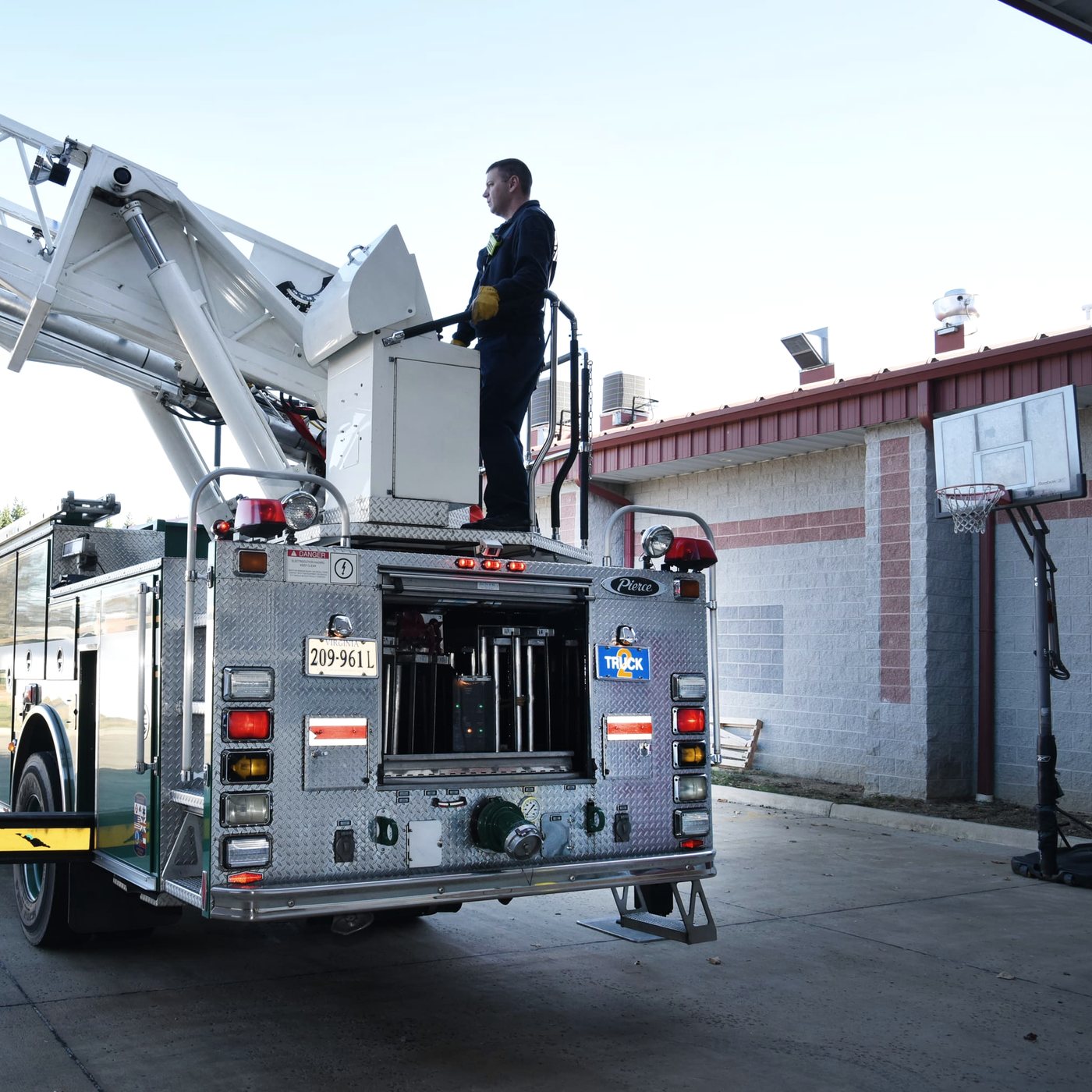
An aerial ladder truck with its ladder extended, a firefighter working at the turntable

Integrity for America's Firefighters

Everyone sells you a score. Nobody sells you the record.

A promotional exam decides who commands a fireground. When a passed-over candidate, a union grievance or a reporter challenges it, what evidence does your department actually produce?

0
Registered fire departments in the United States
US Fire Administration, Jan 2024
0
Of departments have members doing structural firefighting without formal training
NFPA Fifth Needs Assessment, Dec 2021
0
Back pay set by a federal court over two written fire entrance exams
US Dept of Justice, 12 Mar 2012
0
US state fire certification programs offering remote proctoring through Pearson VUE
Pearson VUE OnVUE program index, Aug 2026
A fire officer working at a mobile incident command station
Drop-in slot · CEO video

Why we are doing this

We are giving the first year away.

Nobody in our category has done this work in the fire service. The requirement is already written into state regulation. The incumbent vendors have published nothing about verifying who sits the test.

So we would rather earn the reference than claim one. Twelve months, no cost, and you can end it on thirty days notice for any reason.

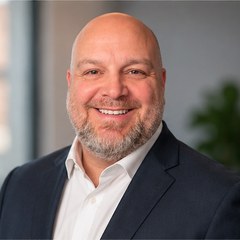
Brandon A. Smith, Chief Executive Officer, Integrity Advocate

The record

This is not a hypothetical risk.

Named, dated, documented incidents. Every figure below traces to a government report, a court record, a regulator's file or first-hand reporting, and every source is listed at the bottom of this page.

2015
Los Angeles County
Nine tests circulating. 17 sworn officials. Armored truck retest.
2017
Virginia Beach
Chief leaks the tactical problem, then grades the answers.
2019
Austin
Two firefighters fired for photographing a hazmat exam.
2020
Norwalk
Entire hiring list discarded. Assistant chief and son resign.
2024
Hialeah
Eligibility list voided. Fire chief resigns.
2025
Waterbury
Proctor leaves 13 recruits alone for nine minutes.
2026
Muncie
Eight years of process. State cannot prove what happened.
An aerial ladder truck outside a fire station
Apparatus
Looking up an extended aerial ladder against the sky
Aerial operations
A firefighter in the gear room of a fire station
Ready room
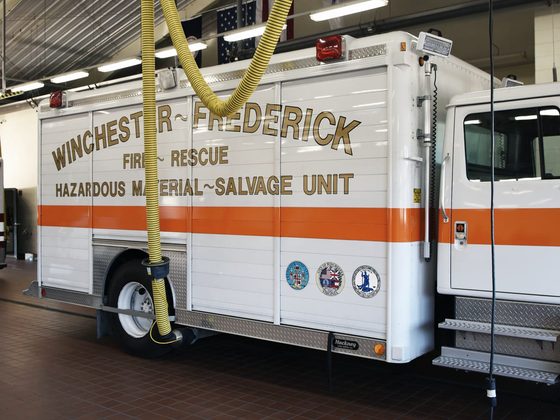
A hazardous materials rescue and salvage unit in a station bay
Hazmat
US Fire Administration · public domain
Waterbury CT · 15 Aug 2025
85/120

Questions one fire cadet admitted answering with Google during an EMT certification exam. Surveillance video showed the proctor seated with his back to the room and leaving thirteen recruits alone, once for more than nine minutes. Seven of the thirteen were found to have cheated.

The department's integrity control was a man with his back to the room. It was caught because a third party's security camera happened to be recording him.

Los Angeles County · Feb 2015
17

Sworn officials, including a battalion chief and ten captains, found to have obtained and forwarded confidential exam content across at least nine different tests, including the civil service exam for fire captain.

Auditors, as quoted by the Los Angeles Times: dissemination of exam content between fire personnel "is not uncommon." The retest moved under armored truck and sheriff's escort.

NAVSTA Newport · OSC DI-16-5887
7,051

Training records with no instructor listed at all. Investigators also found 110 courses credited to personnel who were on leave, 515 logged on Sundays when no training was held, and 518 shipyard courses at an installation with no shipyard.

Both whistleblower allegations substantiated. The fire chief retired.

Muncie IN · 2018 to 2026

Eight years, and the state still could not prove it

Roughly thirty witnesses. Two agencies. A federal copyright suit. In March 2026 a court found "no credible, corroborated, or substantial evidence," ordered every certification reinstated and ordered the record expunged.

After-the-fact enforcement failed because nobody could prove what happened inside the examination room.

Hialeah FL · 2023 to 2025

An eligibility list voided nineteen months later

A prior year's oral exam was forwarded to a candidate, who scored a perfect 100. The personnel board voted unanimously to void the oral portion. The fire chief resigned.

Three candidates who passed legitimately were ordered to sit it again, because nothing separated them from the compromise.

The mechanism

The algorithm decides what a person looks at.
A person decides what it means.

Nobody sends an impostor to sit a recorded promotional exam. The failures that actually happen are a second device, another voice in the room, a browser window that should not be open, and a proctor who was not watching. That is what this is tuned for. Some vendors imply no software is involved in their determinations. That is not true of us and we will not say it, so here is exactly where the automation sits and exactly where it stops.

session · lieutenant promotional exam · candidate 0417
OBJECT DETECTED
Object detection for phones, notes, second screens and other materials. This is Waterbury and Garland.
EXTERNAL RESOURCES
Screen monitoring for a second browser window, a search, a document, a messaging application.
BACKGROUND NOISE
Audio analysis for speech and other sound in the room. Someone reading answers aloud is audible.
COUNTERAI
Behavioural baselining for patterns associated with generative AI assistance.
MULTIPLE FACES
Face detection for any additional person in frame.
LOOKING AWAY
Gaze direction and head pose, tracked across the full session.

Runs on 100% of sessions. Produces flags, never outcomes.

OBJECT DETECTED
Materials your program permits against materials it does not. Your rules, in your words, written down before the exam.
EXTERNAL RESOURCES
An approved reference against a search engine. One Waterbury recruit answered roughly 85 of 120 questions this way.
BACKGROUND NOISE
A normal household against actual outside assistance.
MULTIPLE FACES
A reflection, a poster or a mirror against a second person in the room.
LOOKING AWAY
Approved accommodations, screen layout, natural movement. A candidate who reads slowly is not a candidate who is cheating.

Every flag is adopted or rejected by a named human reviewer, with a timestamped rationale. That record goes to your department, not just to us. Identity is checked against a photo ID at the start of every session as a matter of course, but we are not going to pretend proxy testing is your problem. It is not.

Illustration. Advances automatically until you click, then stays where you put it.

The landscape

Their marketing, verbatim.

We reviewed the current public materials of the principal vendors selling examinations into the American fire service. None of them publishes all three of an independent proctor outside your chain of command, human review of the session rather than algorithmic flagging alone, and a reviewed record delivered to the agency as its own evidence. This is a claim about what they publish. We invite any of them to correct it.

Their marketing, verbatim
All your candidates need is a computer and an internet connection.
Retrieved Aug 2026 No proctor published No record to the agency
Their marketing, verbatim
A combination of computer-based technology and live proctors.
Retrieved Aug 2026 Up to 15 candidates per session No record to the agency
Their marketing, verbatim
The proctor will end your exam if you physically leave the room.
Retrieved Aug 2026 Up to 3 hours, no breaks No record to the agency
Government exhibit

The states already wrote down what they require. They just cannot deliver it.

Colorado's Division of Fire Prevention and Control publishes its written examination proctor policy as a public document, revised 1 January 2026. It is a fully specified, in-person-only regime.

It contains no provision for remote, online or virtual administration of any kind. Colorado can satisfy its own rule only by assembling people in a room, with a certified officer off the floor and a locked container of iPads.

DFPC written proctor policy · rev. 01 Jan 2026
Candidate must show federal or state issued photo identification and be checked against the registered candidate list
"All test candidates shall be in full view of the examination proctor"
Proctor swears under penalty of perjury to "constant supervision by me during the entire examination," citing C.R.S. 18-8-404 and 18-8-405
Proctors may not administer written examinations for courses they instructed
No remote administration provision. None.

Our position

Three things we believe about this.

01 · The proctor is the single point of failure

Your integrity control is a member of your department.

Greeley's proctor was criminally convicted for distributing the certification exam he administered. Muncie's harvested live questions from the recruits he proctored. Virginia Beach's disclosed the tactical problem in advance, then personally graded the answers. Waterbury's sat with his back to the room and left it twice.

In each case the person trusted to guarantee the exam is the person who compromised it, and nothing recorded what he did.

02 · The record is the product

In a civil service system, evidence outlives the score.

Every promotion is appealable. Most jurisdictions give a candidate days, not months, to contest an exam. Whatever record exists on the day of the test is the record that governs the appeal, and a compromised exam is usually discovered long after that window has closed.

A New Jersey public safety promotional exam administered in 2019 was invalidated on appeal in 2025, on a defect in how it was administered.

03 · It protects the honest candidate

When an exam leaks, the record is what separates the clean.

Hialeah voided an oral exam after a prior year's paper was forwarded to a candidate. Three people who had passed legitimately were ordered to sit it again nineteen months later, because nothing distinguished them from the compromise. Waterbury's four clean cadets were cleared only because a third party's camera happened to be recording.

It also carries the context. A member who sat the exam after a working fire may look away more, take longer, shift in his seat. Those are evaluated by a person against your written rules, not scored by software.

A complete session record separates the honest candidate on day one, and it belongs to the member as much as to the department.

Coverage

What is included, and what is not.

These are the live Integrity Advocate tiers, reproduced as published. Excluded features are shown greyed rather than hidden, because what a tier leaves out is information a buying committee needs.

Low stakes
IntegrityProctorLite

Cost-effective integrity without compromising student experience.

Suggested for:
QuizzesFormative assessmentsParticipant monitoring
9 of 19 Identity, in-frame flagging and audit-ready reporting.
ID Verification
  • Clear Image of Participant
  • Accepted Photo ID
  • Session Name & ID match
Flagging
  • Remain in Camera View
  • No Other Participants
  • No Headphone Use
  • No Electronic Devices
  • No External Resources
  • No Messaging Applications
  • (And More)
Monitoring & Review
  • AI + Human Review
  • Screen Monitoring
  • Audio Feed
  • Full Video Feed
Assessment Security
  • Onscreen Content Protection
  • CounterAI™
  • Room Scan
  • Second Camera
Reports
  • Audit-Ready Reporting
Book a Demo
Mid stakes
IntegrityProctorPlus

Comprehensive monitoring with the flexibility most institutions need.

Suggested for:
Final examsProfessional certificationsHigh-enrollment programs
15 of 19 Adds screen monitoring, CounterAI and onscreen content protection.
ID Verification
  • Clear Image of Participant
  • Accepted Photo ID
  • Session Name & ID match
Flagging
  • Remain in Camera View
  • No Other Participants
  • No Headphone Use
  • No Electronic Devices
  • No External Resources
  • No Messaging Applications
  • (And More)
Monitoring & Review
  • AI + Human Review
  • Screen Monitoring
  • Audio Feed
  • Full Video Feed
Assessment Security
  • Onscreen Content Protection
  • CounterAI™
  • Room Scan
  • Second Camera
Reports
  • Audit-Ready Reporting
Book a Demo
High stakes
IntegrityProctorPro

Multi-layered security and rigorous review for critical assessments.

Suggested for:
Licensing examsBoard certificationsHigh-stakes credentials
19 of 19 Adds audio feed, full video feed and second camera. The appeal record.
ID Verification
  • Clear Image of Participant
  • Accepted Photo ID
  • Session Name & ID match
Flagging
  • Remain in Camera View
  • No Other Participants
  • No Headphone Use
  • No Electronic Devices
  • No External Resources
  • No Messaging Applications
  • (And More)
Monitoring & Review
  • AI + Human Review
  • Screen Monitoring
  • Audio Feed
  • Full Video Feed
Assessment Security
  • Onscreen Content Protection
  • CounterAI™
  • Room Scan
  • Second Camera
Reports
  • Audit-Ready Reporting
Book a Demo
A recommendation that costs us a feature

We recommend room scan be contractually disabled for public safety.

A federal judge has held that a remote-proctoring room scan of a person's home is a search under the Fourth Amendment. A fire department is a government actor, and a promotional candidate is a public employee being recorded in his own home by his employer. That is a harder case than a university's, not an easier one. Identity verification and conduct review do not require sweeping a member's home, and the feature that creates the exposure is not the feature that produces the evidence.

How it works

Twelve months. No cost. Out on thirty days notice.

We are running this with five departments, not with everyone who asks.

5 Founding
departments
2026 to 2027

Why the number is five, and not unlimited

Every session in this program is reviewed by a trained human being. On top of that each department gets a retention schedule drafted against its own state's law, a walkthrough with its local before deployment, and a study written and approved at the end. Five is what we can do properly. A free offer with no ceiling would mean doing all of it badly, and the first thing that would slip is the human review, which is the entire product.

We are also choosing for a spread, because a study drawn from five departments that all look alike proves nothing:

  • Career, combination and volunteer
  • Different civil service structures
  • Different states, for the retention and records questions
  • At least one with an active IAFF local at the table
  • At least one running certification volume, not just promotions
  • A department willing to say publicly what did not work
01

Scope and rules

We sit with your training division and HR and write down what is permitted in your exam, in your words. Reference materials, breaks, calculators, accommodations.

Week 1 to 2
02

Union walkthrough

We present to your IAFF local before deployment, not after. What is recorded, what is not, who reviews it, how long it is kept, how a member appeals.

Week 2 to 3
03

Pilot cohort

One examination, one cohort, run in parallel with your existing process so nothing depends on us on day one.

Week 4 to 8
04

Review and expand

You read the records. If they are not useful, we stop. If they are, we extend to the scope you choose.

Month 3 onward
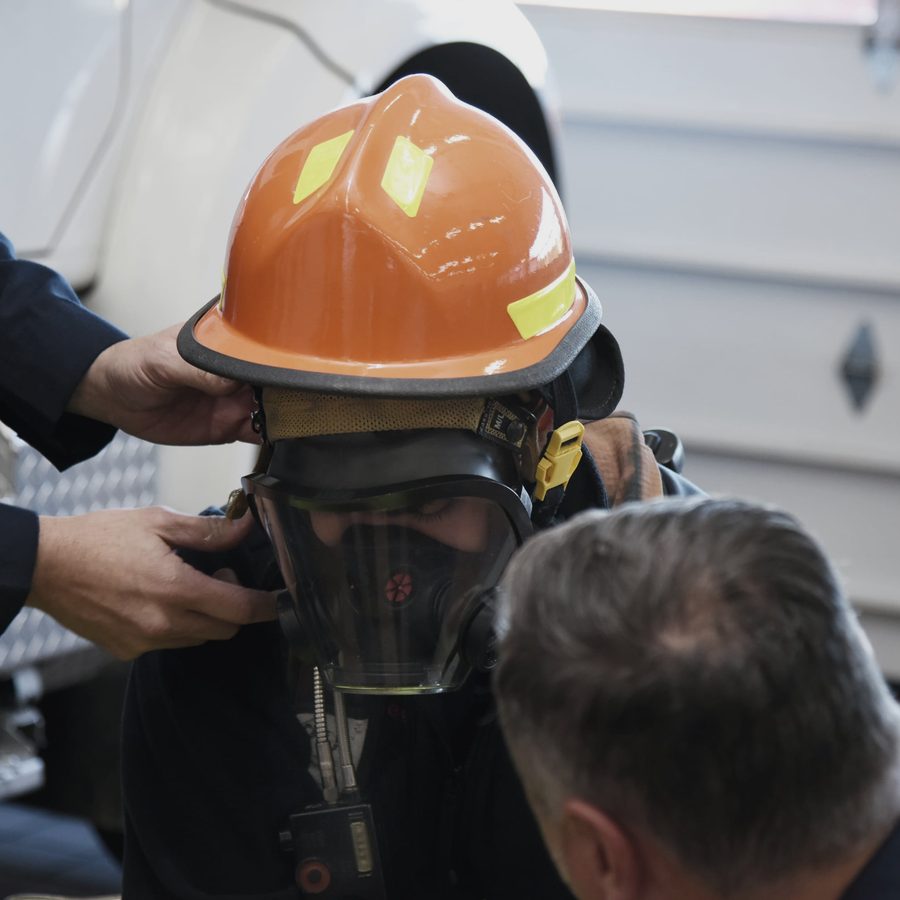
Two firefighters helping another fit a face piece
Your rules, written down first
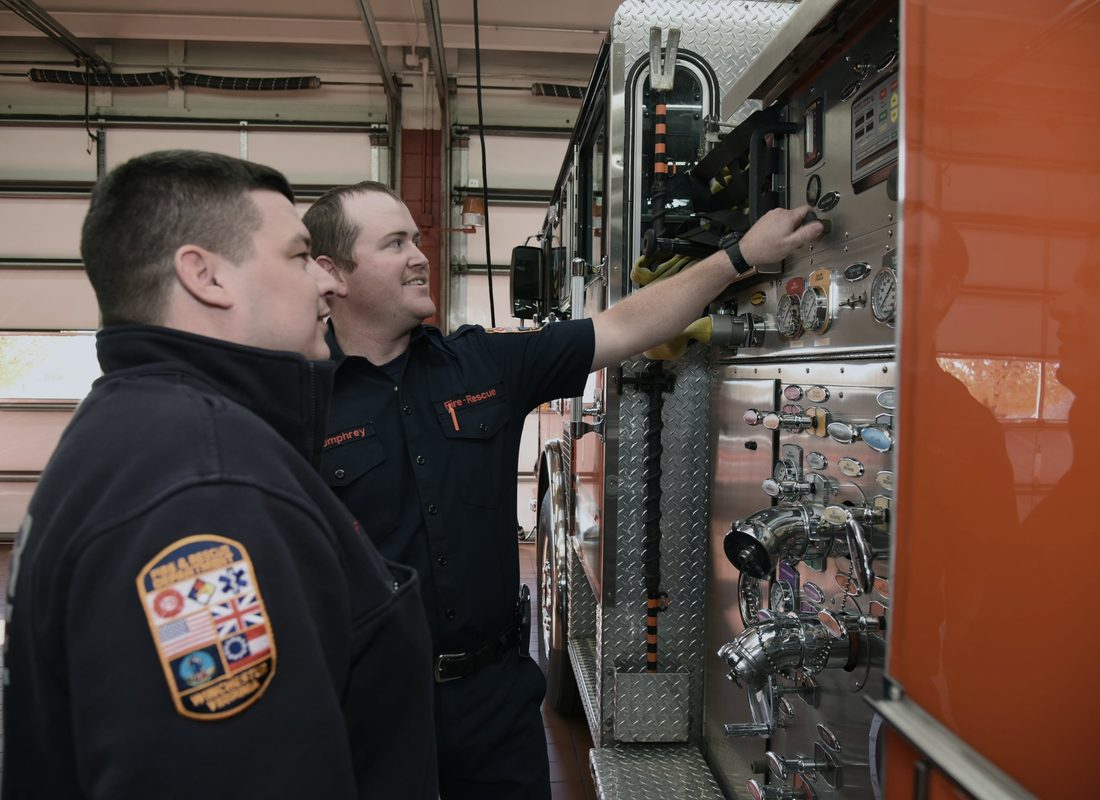
Two firefighters at an engine pump panel
Then one cohort, in parallel
Deployment
No download, extension or admin permission in standard deployment
Retention
Typically deleted within 24 hours, customer controlled
Independent audit
SOC 2 Type II attestation report, available under NDA
Your data
Full export at any time, and on exit
Verified by Human Review seal: a person icon inside a ring reading Verified by Human Review, Trusted Outcomes
Verified by
Human Review™

The difference

An algorithm never decides.

No automated flag becomes an outcome on its own. A trained reviewer, outside your chain of command and with nothing at stake in who gets promoted, evaluates every flagged event in context against your program's rules, and records the final outcome with timestamped evidence and reviewer notes.

That is not a comfort feature. It is the difference between a determination you can defend at a civil service hearing and a number nobody can explain.

Questions

The ones that actually get asked.

For chiefs, HR and civil service

Yes. We went through roughly twenty-five documented fire service examination failures and not one of them was a proxy test-taker. Nobody sends an impostor to sit a recorded exam, and any vendor selling you identity verification as the headline has not read the record.

What actually happens is three things: content leaking before the exam, assistance during it, and a proctor who was absent, conflicted or compromised. We do not fix the first one. Custody of your item bank, who has access to it and whether instruments get reused are your controls, and no vendor can sell you those. We fix the second and the third. And when content leaks anyway, we are what lets you separate the candidates who passed clean instead of voiding the whole list.

No. We do not write, validate or score your examination. Item development, job analysis and content validation stay where they are. We establish who sat the test and produce the record of how they sat it.

Usually, because a genuinely $0 engagement is not an expenditure and does not trip a dollar-threshold bidding requirement. The real questions are your gift and ethics rules, and whether running a pilot disqualifies us from a later competitive award. We ask your procurement officer to answer that second one in writing before we start.

Exam content and scoring keys are broadly exempt. A video of a candidate is not a test question, and is more naturally analysed as a personnel or investigatory record, which varies by state. We arrive with a written retention schedule drafted against your state's law and agree it with your counsel before the first session, rather than after the first request.

There isn't one, and we are not going to invent one. We went through the IAFF constitution and by-laws, all 74 resolutions from the August 2026 convention, the 2024 and 2018 resolution sets, the Model Contract Language Manual, and the two largest state associations. No union in the American fire service has published a position on how promotional examinations are administered or recorded.

What the IAFF model contract does contain is a single clause on promotion: a member bypassed for promotion "may appeal such decision to arbitration within ten days of receiving written notice thereof." A right to arbitrate, with nothing to arbitrate from.

We would rather help close that gap alongside your local than claim an endorsement nobody has given us. Our recommendation is that they sit in the room before procurement, not after.

No. Integrity Advocate has not previously served a municipal fire department, a law enforcement agency, or any US public safety organisation. Our closest comparable work is with a high-risk industrial safety training council and a statutory licensing regulator. That is exactly why the first year is free.

For firefighters and their local

You cannot buy this. You can point us at the people who can.

Tell us who your department is and we will make the approach ourselves. Your name stays out of it unless you tell us otherwise.

Put your department forward

Not a room scan. We recommend that capability be contractually disabled for public safety examinations, and we will put that in the agreement. What is captured is you at your workstation for the duration of the exam, and your identification.

No. Software decides which moments a person examines. A trained human reviewer adopts or rejects every flag, in context, against the rules your department wrote down before the exam, and signs the determination.

You get the same record the department gets. Under the model most vendors sell today, an exam terminated on a proctor's suspicion leaves you with nothing to appeal with. That is the part of this that is for you, not for management.

Two things, and we want to be straight about which is which.

Remote delivery removes the drive. You sit it where you are, instead of crossing the county on four hours' sleep to reach a testing site by a fixed hour. Whether your department also widens the window to more than one morning is their decision with their testing vendor, not ours, and it trades against exam security, so we will not promise you it.

The part that is ours: if you do sit it tired, the record carries that context. A human reviewer looks at what happened against the rules your department wrote down beforehand. Under the model most vendors sell today, an exam that simply looks unusual gets ended by a proctor, and you have nothing to show anyone afterward.

Approved accommodations are configured into your program's rules before the exam, so a permitted behaviour is not treated as a flag. Reviewers see the accommodation context when they evaluate an event.

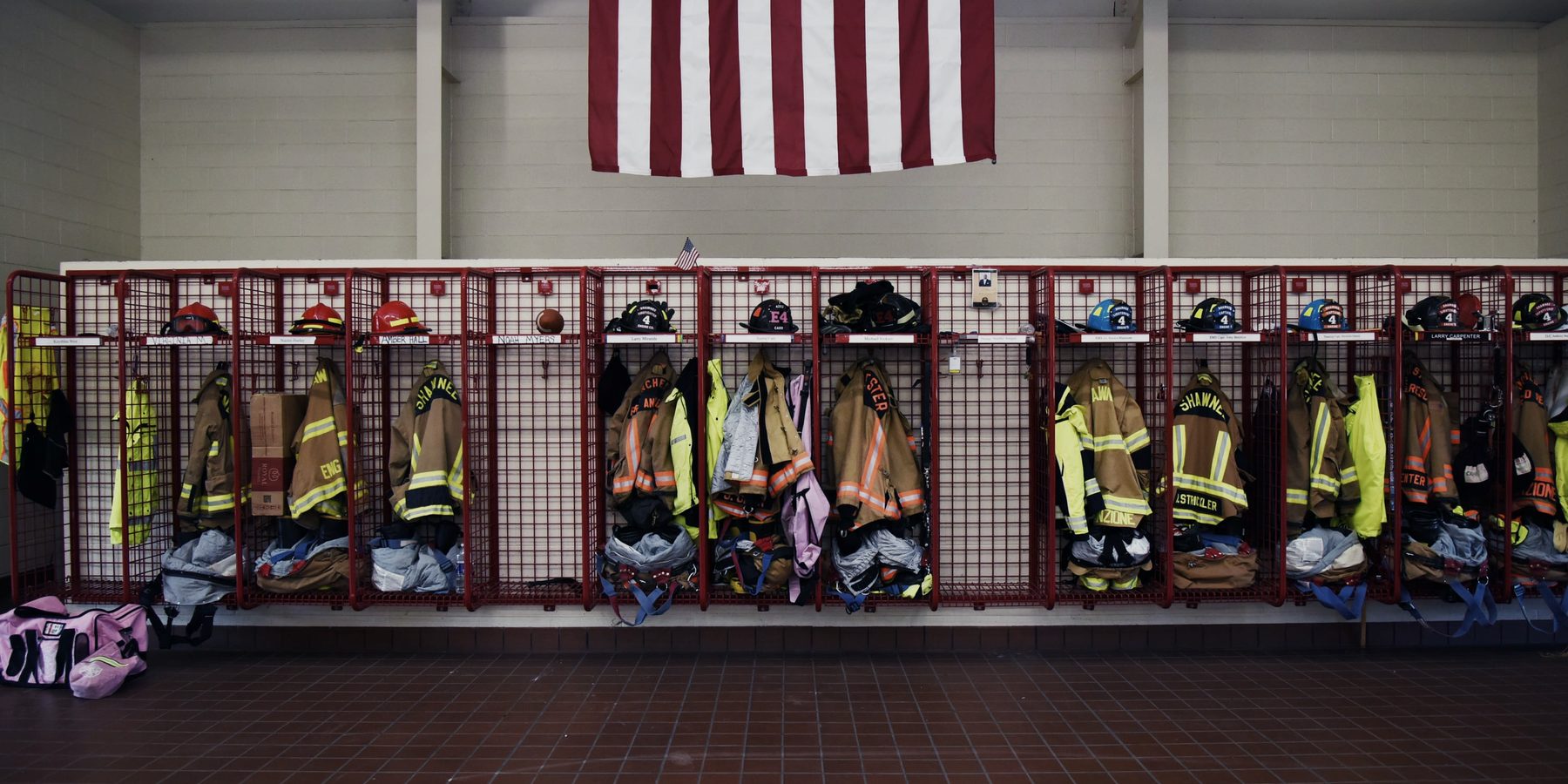
A row of turnout gear on racks in a fire station, an American flag on the wall above US Fire Administration · public domain

What this is really about

Nobody in this story set out to cheat.

A proctor turned his back. A chief forwarded a file. An instructor signed a roster for a class that never met. In almost every case the failure was ordinary, and the consequence was not.

Three candidates in Hialeah who did nothing wrong sat the same exam twice, nineteen months apart. That is who the record is for.

Next step

Thirty minutes, and we will show you a record.

Not a slide deck. An actual session record, so you can decide whether it is the thing you would want in front of a hearing officer. If it is a fit both ways, we will talk about one of the five founding places.

Brandon A. Smith, Chief Executive Officer of Integrity Advocate
Brandon A. Smith
Chief Executive Officer
Integrity Advocate

I take these calls myself for the first year of this program. If it is not a fit I will tell you on the call rather than in a follow-up sequence.

Scheduler

Pick a time that works

The booking calendar does not load inside this preview. It works on the live site. Until then the link below opens it directly.

Open the scheduler

Sources

Every number on this page, and where it comes from.

Where a finding rests on trade press rather than a primary document, we say so.

Fire service scale. US Fire Administration, National Fire Department Registry Summary, January 2024.

Training gap. NFPA, Fifth Needs Assessment of the US Fire Service, December 2021. Census of 26,258 departments, 2,969 responses, 11% response rate, ranging from 7% among departments protecting under 2,500 people to 39% among those protecting over 500,000. We disclose that because it cuts in our favour: the departments least likely to have answered are the small ones where the gap is largest.

FDNY back pay. US Department of Justice, 12 March 2012. The Second Circuit later vacated the intentional-discrimination finding while affirming the disparate-impact liability, the monitor and the back pay. The money was never predicated on intent.

Pearson VUE. Published index of all programs offering OnVUE online proctoring, retrieved August 2026, together with the Florida and California fire program pages. The only fire-service program on that global list is in Australia. This proves an absence within Pearson VUE; it does not prove those states offer no remote option through another channel.

Waterbury CT. Firehouse and FireRescue1, September and October 2025. The city's investigative report is not public.

Los Angeles County. Los Angeles Times, 23 February 2015. The Auditor-Controller report is not published in the county's public audit library; these findings are attributed to the Times' reporting of the audit.

NAVSTA Newport. US Office of Special Counsel File No. DI-16-5887, Report of Investigation, public release version, investigation completed 9 June 2017.

Muncie IN. Indiana DHS administrative law judge order, 24 September 2024; Marion Superior Court order, 23 March 2026.

Hialeah FL. City of Hialeah Personnel Board minutes, 6 January 2025; Firehouse, WLRN and FireRescue1, December 2024.

Colorado DFPC. Written Proctor Policies, revised 1 January 2026, and the DFPC proctor resources page.

Vendor quotations. Current public materials of the named vendors, retrieved August 2026. Quoted verbatim from their own pages.

Room scan. Ogletree v. Cleveland State University, N.D. Ohio, August 2022, amended December 2022. Relief ran only to the named plaintiff and no appellate court has adopted, extended or reversed it. We cite it as the clearest judicial statement to date, not as controlling law.

Automated flagging disparities. Yoder-Himes et al., "Racial, skin tone, and sex disparities in automated proctoring software," Frontiers in Education, 2022. Approximately 357 students, one institution, one product.

Integrity Advocate claims. integrityadvocate.com, reviewed August 2026, including the product tier matrix, identity verification, human review and privacy policy pages.